Get Your Business Ready for the Holidays With A Marketing Calendar
It’s the end of summer, and you know what that means: it’s time for your business to start getting ready for the holidays! “Isn’t it a bit early?” you might be thinking, but since Q4 is the biggest and busiest time of year for businesses of all sizes, you’ll need to plan ahead.
Generally speaking, if you don’t have a strategy by September you’re already cutting it close, but if you don’t have anything planned yet, don’t panic! You can easily start your holiday planning today with the help of a holiday marketing calendar.
What Is A Marketing Calendar?
A marketing calendar is a schedule or roadmap that outlines all of your planned marketing activities for a specific period of time, usually over the span of a year divided by quarter, but with specifics at the weekly or daily level. Marketing activities are anything designed to drive new business, increase repeat business, drive product-specific sales, or boost brand awareness and site traffic, such as emails, social media posts, sales, giveaways, and more.
A holiday marketing calendar covers everything you’ll be tackling in Q4 specifically to target holiday shoppers and make those critical end-of-year sales through engaging holiday-themed content, offer promotions like discounts or gift bundles, and anything that can keep your brand, products, and business at top-of-mind when people are most likely to buy.
Your calendar should also account for any specialized graphics you’ll need to create, written content and website updates, as well as timelines for hard materials that need to be ordered in advance, such as gift wrapping or physical gift cards. In short, a marketing calendar is merely an elaborate checklist that allows you to be proactive rather than reactive in your marketing strategy.
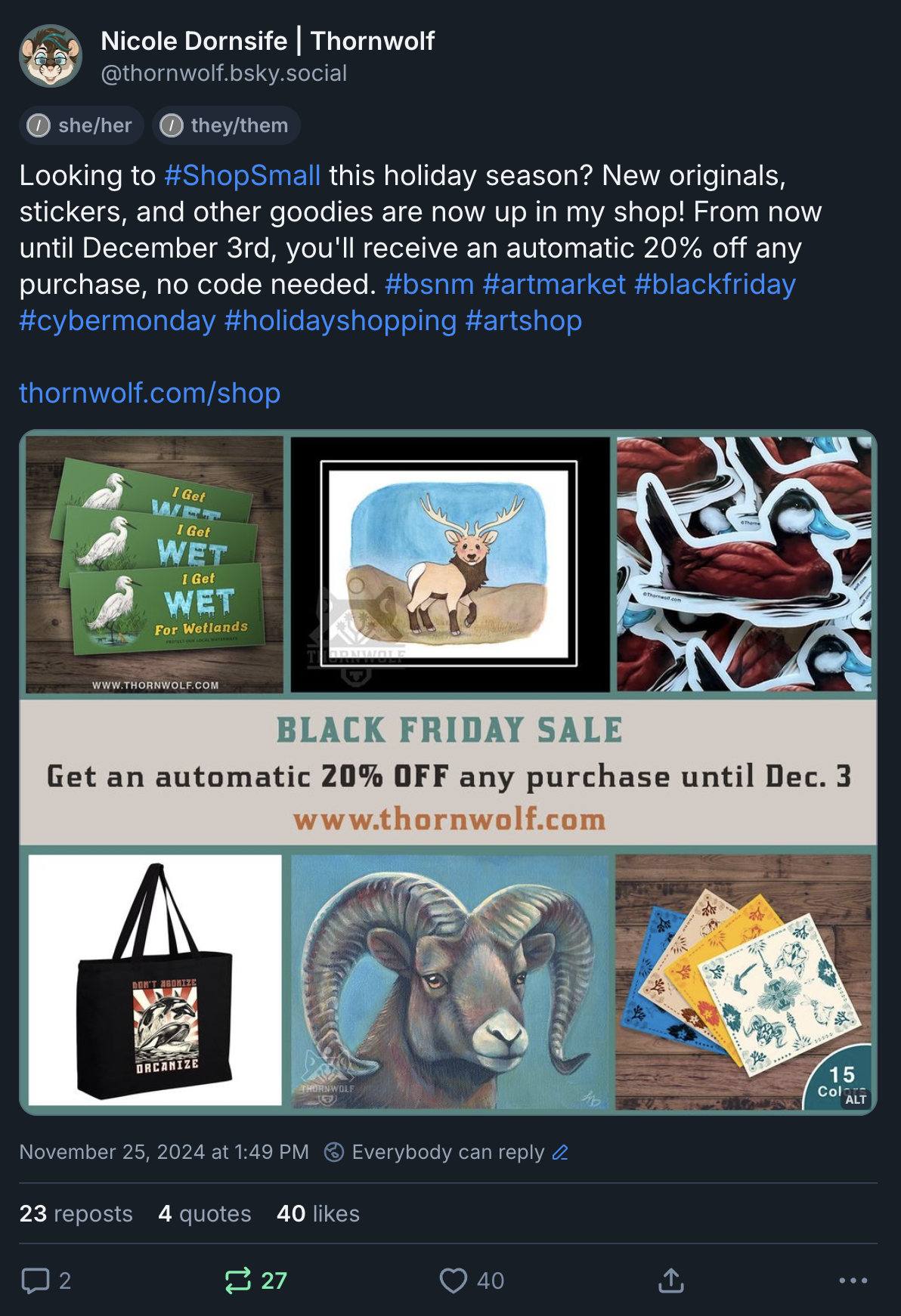
An example of a Blue Sky post I made for my business on Thanksgiving of 2024. Note the use of hashtags, sale amount and cut off date, and imagery.
Important Dates to Remember
When planning your holiday marketing strategy, you’ll want to start with an overview of important dates and build out your content, outreach, and advertising around them. You can recycle this plan annually with date and content adjustments so you’re better prepared for next year.
It can be easy to get overwhelmed, so to make it manageable, it’s best to tackle things on a month-by-month and day-by-day basis. Here are some important dates to plan around broken down by month.
November
While some people start their holiday shopping as early as October, the bulk of holiday shopping occurs between Thanksgiving and the second week of December, so it’s important to focus your efforts on these critical dates. Make sure you have all of your marketing emails, sales, gift packages, special offers, and social media posts prepared and ready to go well before Thanksgiving.
In addition, don’t skip on making use of trending hashtags (specific to each social media platform, if supported), festive imagery, and multi-day efforts to drive engagement and keep the momentum going during this peak buying period.
Thanksgiving - 3rd Thursday of November: Even though Thanksgiving* has no specific date, despite being an American holiday it acts as the anchor point for most holiday marketing efforts worldwide, so be sure to adjust your marketing calendar annually.
*Note: While Canadian Thanksgiving is held on the second Monday in October, it does not tend to have the same holiday buying power as American Thanksgiving as it is considered too far out to be ideal for holiday-minded shopping.Black Friday - The day after Thanksgiving: The day immediately following American Thanksgiving is when many people begin their holiday shopping. It is the official marker of the beginning of the Christmas and winter holiday season both in the US and worldwide due to timing in the lead up to winter gift-giving holidays.
Social media hashtag suggestions: #BlackFriday #BlackFridaySale #BlackFridayDeals #GiftIdeas #HolidayShopping #ChristmasSale
Small Business Saturday - The Saturday after Thanksgiving: Small businesses can stand out among buyers looking to support independent businesses and creators in their own dedicated shopping day. If you’re a small business, this is a good opportunity to highlight your uniqueness and offer a personal touch that bigger retailers simply don’t have.
Social media hashtag suggestions: #SmallBusinessSaturday #SmallBusiness #ShopSmall #SupportSmallBusiness #IndependentBusiness #ShopIndie #SmallBizSat
Cyber Monday - The Monday after Thanksgiving: Originally created for exclusive online deals, use this as an opportunity to drive traffic to your online shop as part of your Black Friday and Small Business Saturday marketing efforts.
Social media hashtag suggestions: #CyberMonday #CyberMondayDeals #CyberMondaySale
Giving Tuesday - The Tuesday after Thanksgiving: This day is dedicated specifically to charitable organizations. If you work with or run a charity, create dedicated marketing materials and content specific to this day. If you’re not a charity, this is a good opportunity to highlight a charity that your business works with or supports, which will not only boost your own visibility, but also shows that your business is charity-minded and makes buyers feel good about supporting you. But most importantly, it’s always a good thing to selflessly pay it forward when you can.
Social media hashtag suggestions: #GivingTuesday #Charity #CharitableGiving #Nonprofit #Donate #GiveBack

A Giving Tuesday post I made during my own Thanksgiving/Black Friday marketing cadence to highlight one of my favorite local charities, Preserve Wild Poway, which I’ve raised funds for in the past through shop sales.
December
During the lead up to the holidays, it’s advised that you have a holiday shipping cut off date prominently displayed on your website, in your marketing emails, on your shop listings, and any relevant social media posts so that people know clearly when they should buy in order to have their item arrive in time.
Hanukkah - Changes annually between November and December: This 8-day holiday can float, sometimes taking place as early as November. Make sure if you’re targeting Hanukkah gift-givers that you adjust your marketing calendar accordingly.
Winter Solstice - December 20-23: Usually officially observed on December 21, you can reference the longest night of the year to celebrate themes of renewal, togetherness, and even solar themes as part of your broader holiday marketing.
Christmas - December 25: The gift-giving winter holiday that most retailers message around and shipping deadlines and work vacations account for. Buyers respond to Christmas-based messaging such as “Will arrive in time for Christmas” as a solid target date even if they don’t celebrate, as other winter holidays tend to float.
Boxing Day - December 26: The day after Christmas when people redeem gift cards or spend money they’ve received as holiday gifts. Primarily observed by countries within the British Commonwealth, Boxing Day has become more widely recognized worldwide as part of Christmas festivities, but in the US is not often referred to by name and is instead rolled into post-Christmas sales activities.
Kwanzaa - December 26-January 1: This 7-day holiday celebration takes place between Christmas and New Years Day, so your Christmas and Hanukkah marketing efforts will nicely overlap with Kwanzaa’s timing without need for adjustments.
New Year’s Eve - December 31: A good opportunity for a reflective and heartfelt message from you to your buyers for making your year wonderful.
January
Even though the winter gift-giving holidays are over, there is still plenty of opportunity to scoop up some sales early in the following year. As a tip, folks are planning out their year, so productivity tools and products (planners, calendars), subscriptions (Patreon, Ko-Fi, product box subscriptions), and business services (web design, consulting) are especially attractive to buyers during this time.
New Year’s Day - January 1: You can start off the new year with a sale or new product launch to capture sales from people who have received money for the holidays.
Martin Luther King Jr. Day - 3rd Monday of January: While not technically a sales holiday, many retailers hold post-holiday sales during this long weekend, with MLK Day officially being on the third Monday of January. For furries, MLK Day is also the weekend of FurCon (Further Confusion in San Jose), so if you’re not selling at the con, this is a good weekend to hold an online sale to capture some dollars from folks who are not in attendance but already in a buying mindset.
An Example of How to Use Your Marketing Calendar
Let’s apply your marketing calendar to an example scenario. You want to target holiday shoppers seeking Black Friday, Small Business Saturday, and Cyber Monday deals, so you want to hold a 20% off sale that runs from Thanksgiving (that Thursday) to the following Tuesday. This timing would allow you to get the most out of a single weekend by capturing people shopping early on Thanksgiving while they have down time during the holiday as well as any stragglers who are hoping to get in on some last-minute Cyber Monday deals.
Here’s what you’d need to prepare in advance:
Your 20% off store discount, whether they need to enter a code at checkout or it’s automatically applied (Make sure the discount is scheduled and working correctly)
Themed or relevant graphics and product photos
Content for your social media posts and/or email newsletters written, formatted, and scheduled in advance on each platform
For your email marketing, you’ll want to be informative without being spammy, as people will be especially inundated with sales emails from other businesses during this time. It’s recommended that you send out the following:
At least 1 email alerting people of your sale, to go out either Wednesday or early on Thursday (Thanksgiving). This can be long form newsletter style that also highlights some key products, low stock items, or special holiday offers such as gift bundles.
1 email reminding people of their last chance to take advantage of your sale, sent the day before it ends.
Any more than this and you run the risk of giving people email fatigue or adding to inbox overwhelm, so always be respectful in regards to how many emails you send.
Social media posts, on the other hand, have a lot more leeway in that you can pre-schedule them or react on the fly without limit (within reason, of course). Here are some suggestions:
At minimum 1 post per day with the appropriate hashtags (ex: #SmallBusinessSaturday on Saturday, #CyberMonday on Monday, etc.)
Product highlights such as low stock, best sellers, or gift bundles
Product reviews from prior customers
Alternate product photos and videos, such as WIPs of the work being created, real-world applications (stickers on a water bottle or fursuit paws being worn) to generate interest
Reminders of when your sale ends
Repost your own posts at different times of day so they move to the top of people’s feeds who might have missed it the first time
Holiday Marketing Tip: Offer Free (With Purchase) or Low-Cost Items
During the holiday shopping season, it’s important to remember that people are not only looking to save money, but also to stretch their dollar so they can give their loved ones as many gifts as possible within their budget. Having small, affordable items that are under $15, or even bonus items that are free with purchase can attract people looking for stocking stuffers—inexpensive gifts that are typically small enough to fit inside of a Christmas stocking, such as stickers, charms, keychains, free samples, etc.
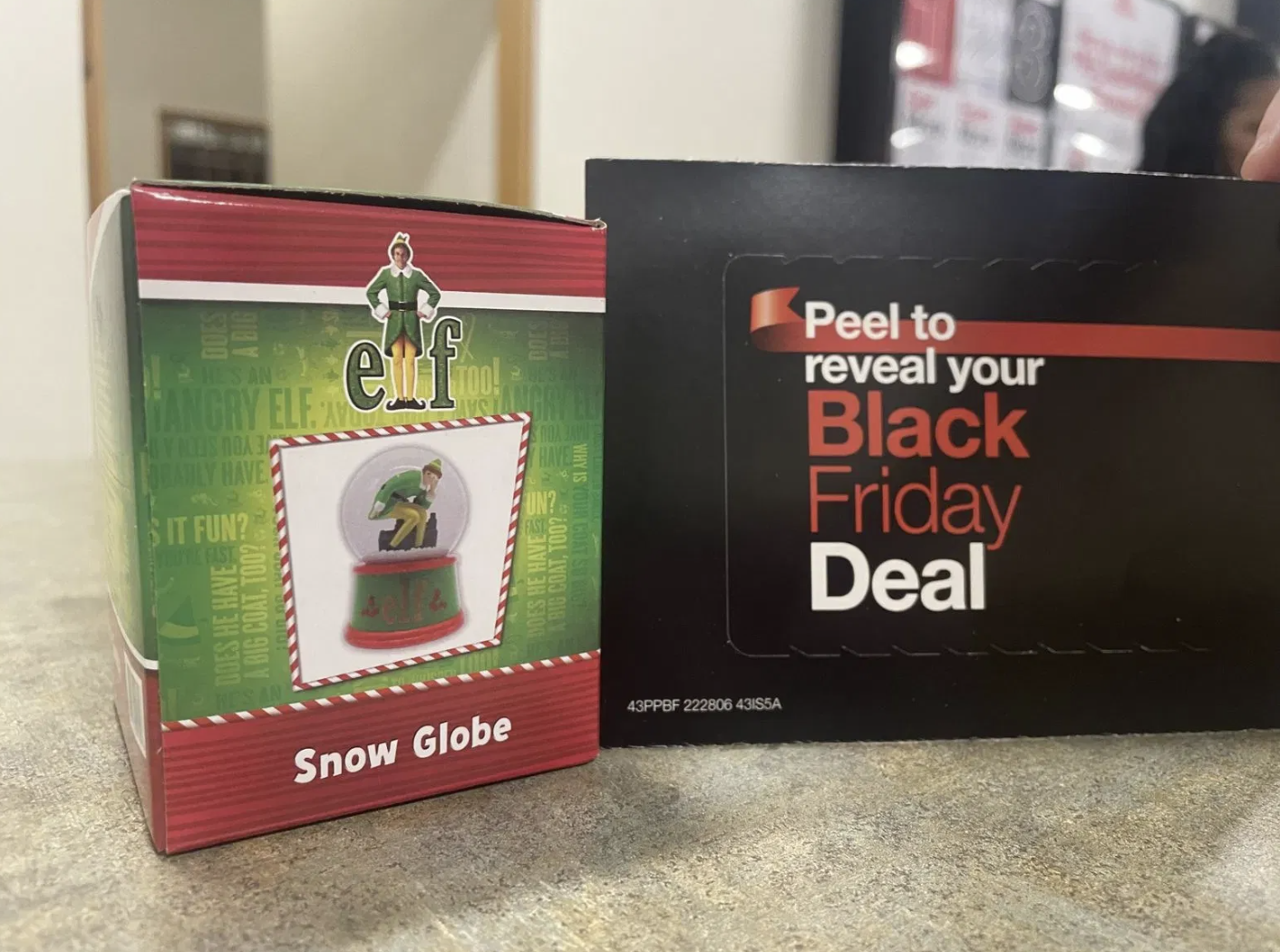
Each year, JCPenney gives early shoppers an exclusive snow globe as a doorbuster gift. These have become collectibles that people line up for. In 2024, JCPenney gave away an Elf themed snow globe in addition to a surprise coupon that could be worth anywhere from $10-$500 off.
You can also use these products to incentivize early buyers. Anyone who has ever stood in line outside a department store at 2AM on Black Friday will know these bonus items as “Doorbusters”, but now you can create that same kind of hype online through flash sales, special offers, and limited time discounts. Just make sure that whatever you’re offering is easy to find in your shop or through clear messaging so that people can get excited by the possibility of getting something extra from their purchase.
Examples:
“The first 10 orders over $20 will receive this free exclusive sticker”
“Book an appointment/service before December 1st to get 20% off”
“All keychains are half off until December 10th, perfect for stocking stuffers”
Using Your Marketing Calendar Beyond the Holidays
While the holidays are the biggest shopping season of the year, driving sales, website visits, and engaging with your customers is a year-round effort. Using this holiday marketing calendar framework as a guideline, you can apply these tips and tricks to the rest of your year. From seasonal product releases to spring cleaning clearance sales, planning your marketing strategy out in advance will not only reduce your workload in the long run, but also open up new ways to engage with your customers and learn more about your audience’s buying trends.
If you’d like more help planning out your Q4, the Furry Chamber of Commerce has also put together this helpful Q4 Small Business Checklist resource to make sure that you’re not missing anything.
Here’s to business success in Q4 and beyond!
Did you enjoy this article? You can leave the author a tip here on their Ko-Fi!